35 Salad Coloring Pages (Free Printable PDF)
Salads offer endless possibilities for combining fresh ingredients. The term salad covers a wide range of dishes, from green and vegetable salads to grain, seafood and fruit salads.
They often feature vegetables and fruits and can be served as starters, sides or main courses. Below are twenty‑five creative salad‑themed coloring sheets, each with a short description and an original, letter‑sized coloring page illustration.
35 Salad Coloring Pages

This page shows a classic Caesar salad with crisp romaine leaves, crunchy croutons, and thin parmesan shavings. It’s a timeless favorite that feels both simple and elegant.
You can color the romaine leaves in shades of light and dark green, the croutons in golden brown, and the parmesan with a soft cream tone. Add light shadows for depth.

A vibrant Greek salad filled with fresh ingredients. Tomato slices, black olives, cucumber rings, red onions, and feta cubes make this bowl colorful and inviting.
Tomatoes can be colored bright red, olives deep black, cucumbers light green with dark edges, and feta in white with a touch of pale yellow. Onions can shine with lilac and soft pink tones.
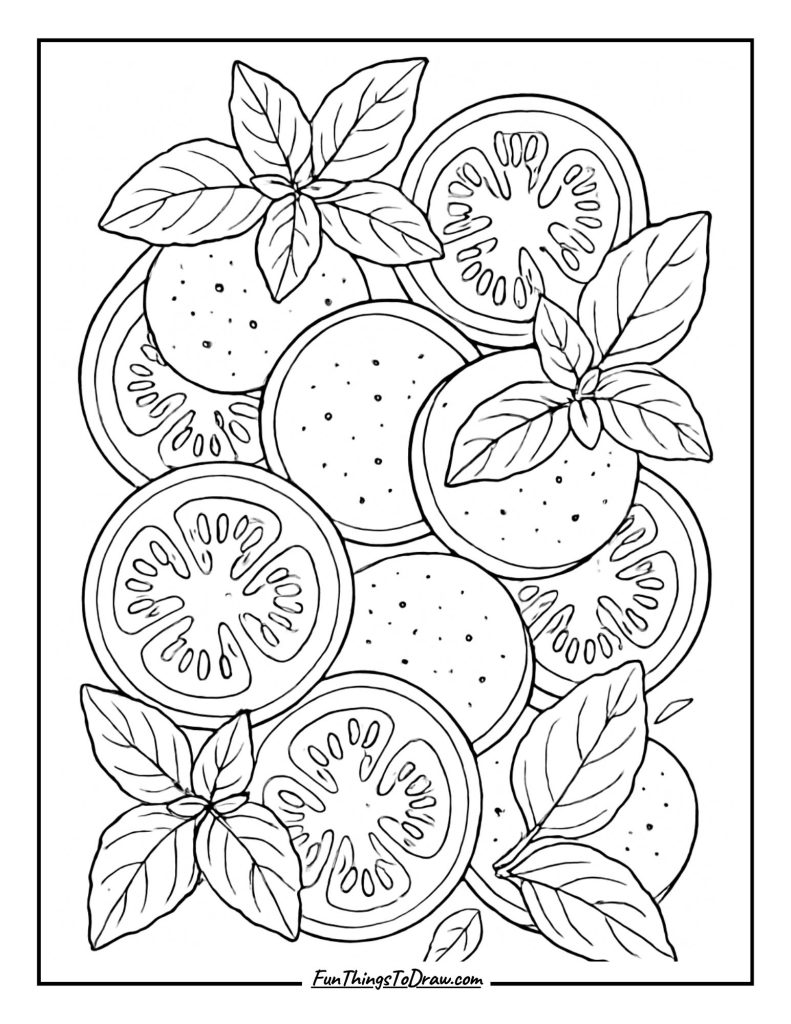
A Caprese salad with juicy tomato slices paired with fresh mozzarella and basil leaves. It celebrates simplicity and freshness.
Use red for the tomatoes, creamy white for mozzarella, and rich green for the basil. To make it pop, you can add slight yellow accents for olive oil drizzles and keep the background light to emphasize contrast.
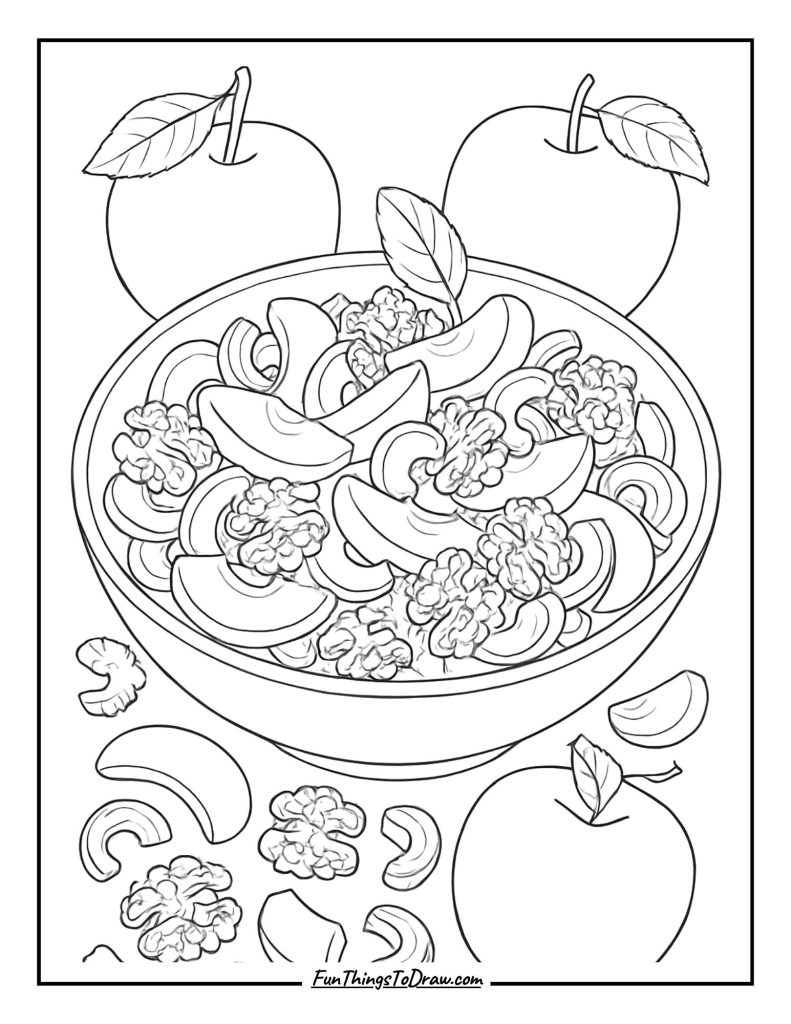
The Waldorf salad is a classic mix of apples, walnuts, and leafy greens. Here, the apple slices stand out, with walnuts adding crunch.
Apples can be shaded red or green, walnuts in warm brown, and lettuce in lively green hues. Grapes may be purple or green, making the page full of natural colors. Highlight apple shine for realism.
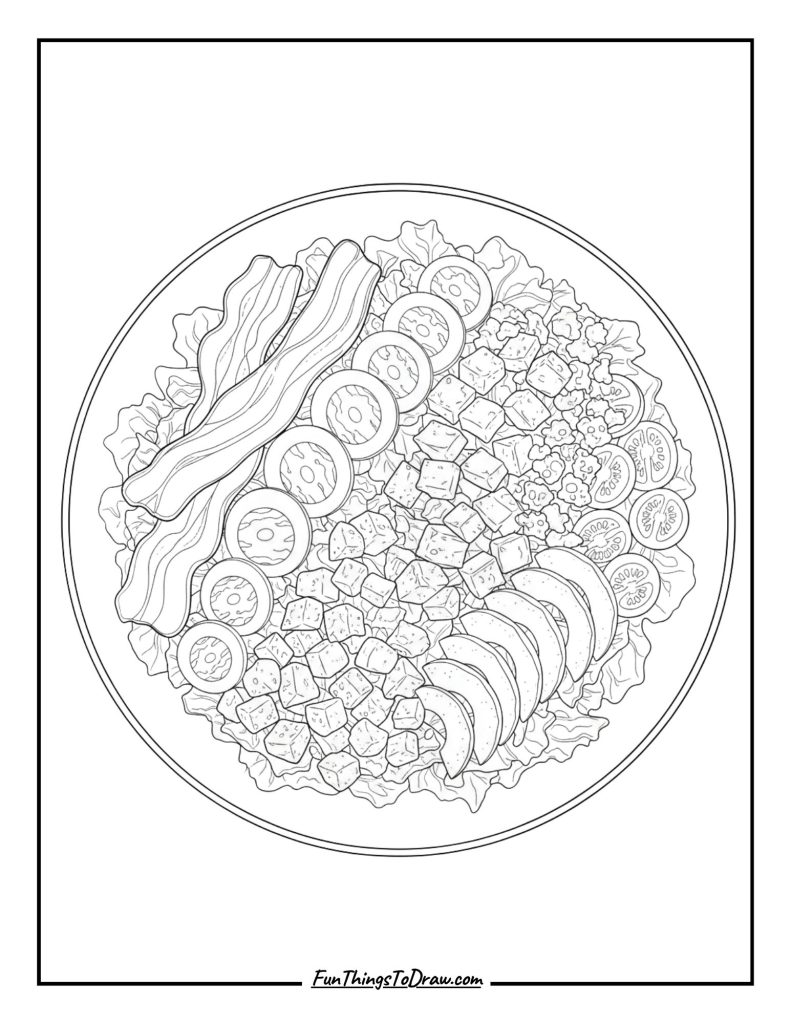
This salad is a rich mix of bacon strips, tomatoes, eggs, and diced chicken or cheese. It’s hearty and colorful. Color bacon with shades of reddish-brown, tomatoes bright red, lettuce green, and eggs with white and yellow yolks. The diced chicken can be soft beige, while cubes of cheese may be orange. A blend of colors makes it lively.
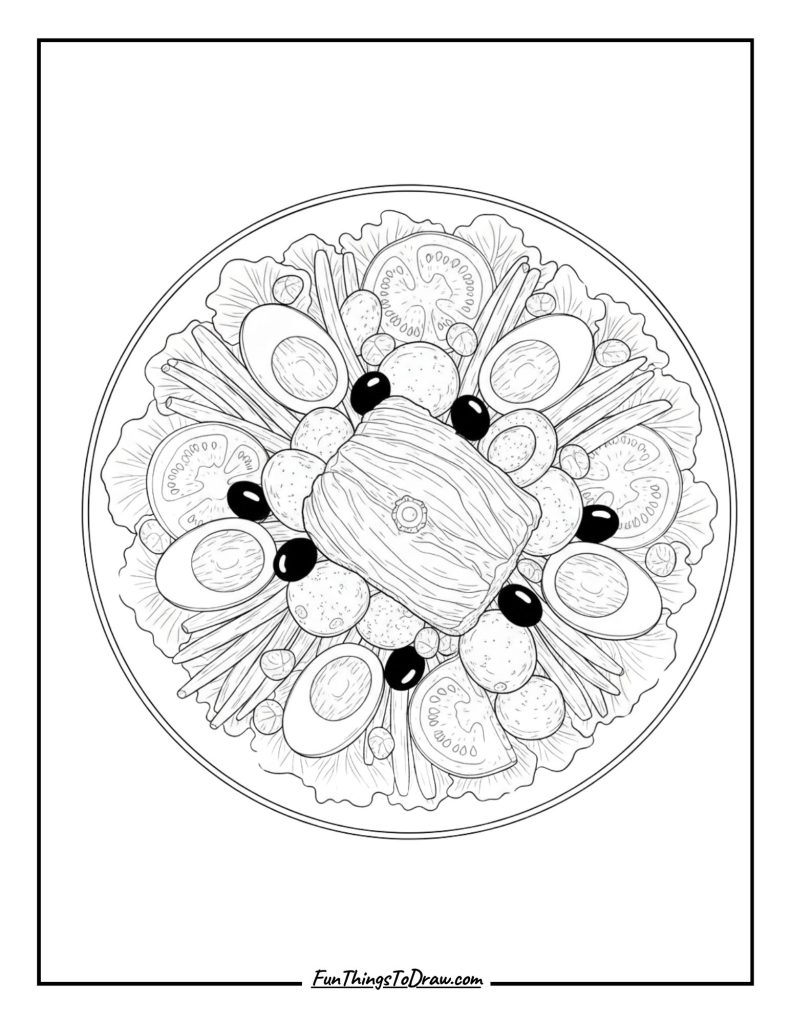
A Niçoise salad featuring tuna, olives, tomatoes, eggs, and green beans. This dish is known for its Mediterranean flair. Color tuna in pale pink or grayish tones, beans in fresh green, tomatoes bright red, and eggs in white with golden yellow centers. Olives can be black or green. Use gentle earthy hues for balance to reflect authentic French charm.
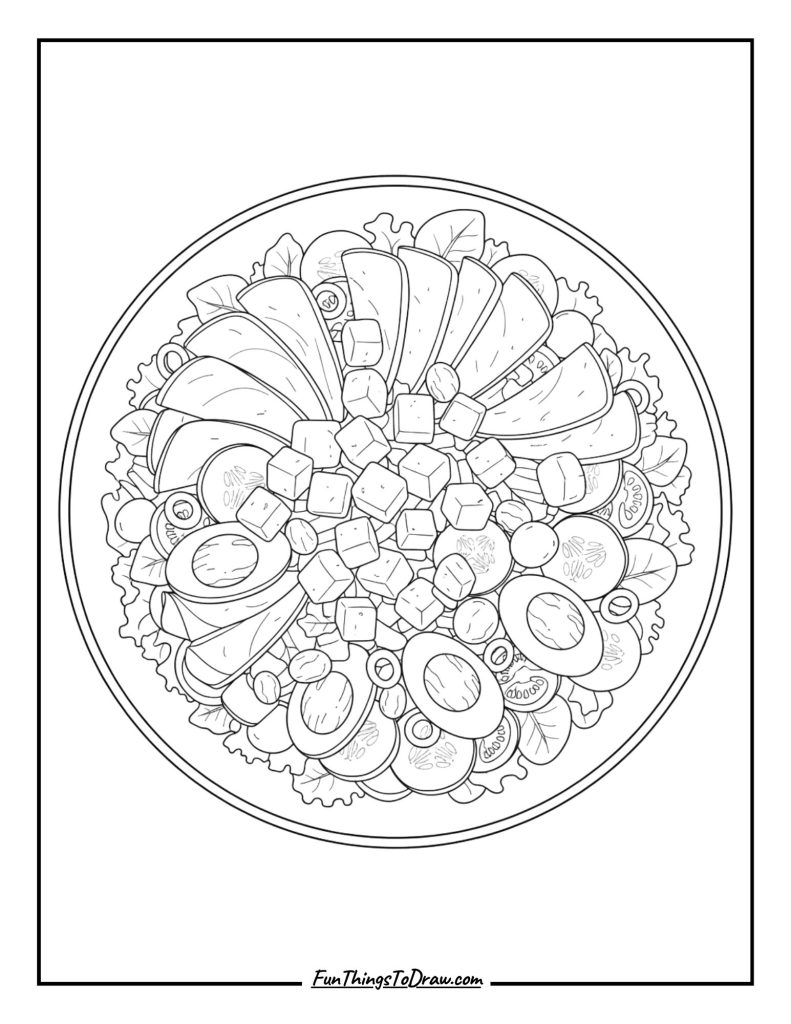
This chef’s salad is hearty, with ham, turkey, cheese cubes, boiled eggs, and greens layered beautifully. Ham can be shaded in pale pink, turkey in light beige, and cheese cubes in orange or pale yellow. Lettuce should pop with green, tomatoes with red, and boiled eggs with white and yellow. A colorful mix will make this look appetizing.
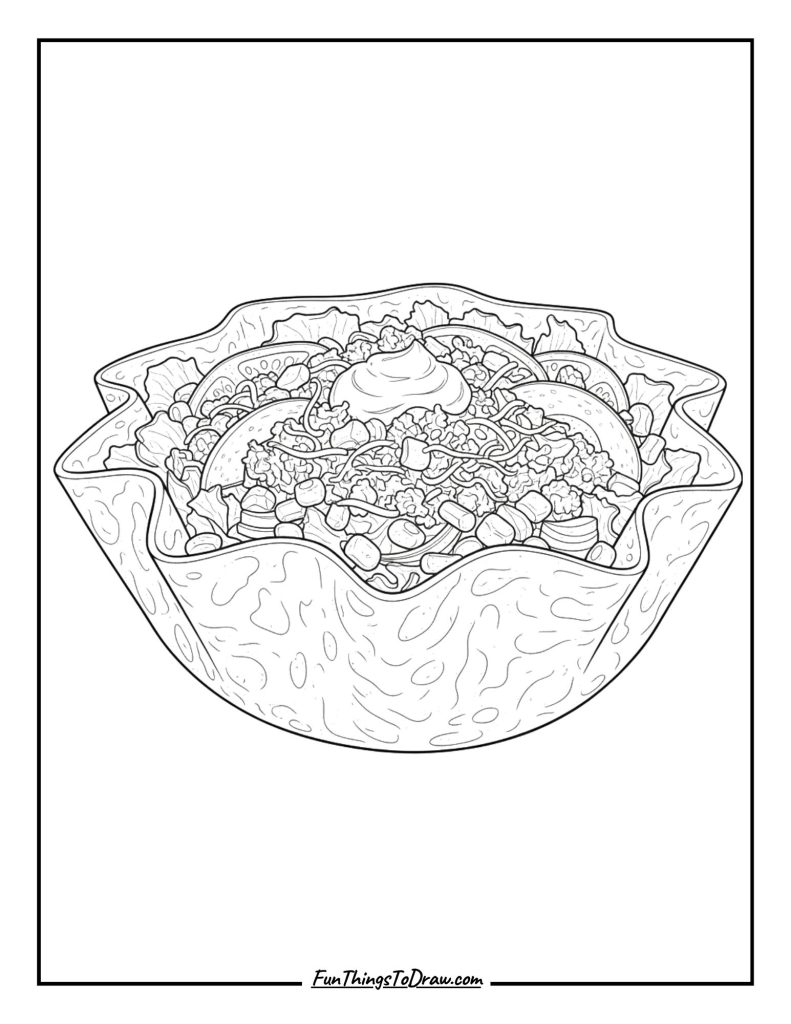
A fun taco salad served in a crispy tortilla bowl. The bowl itself can be shaded golden yellow with darker edges for crunch. Inside, add greens in vivid shades of green, beans in brown, tomatoes in red, cheese in orange, and sour cream in white. You can also give the tortilla bowl some toasty speckles for added detail.
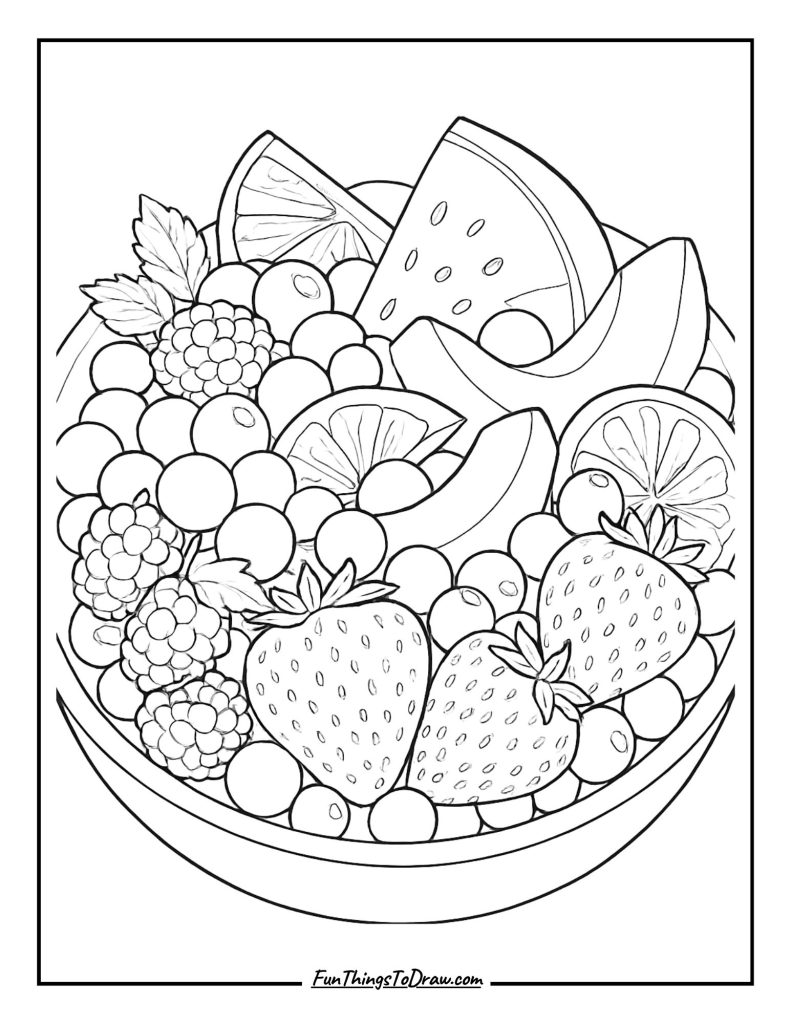
A delightful fruit salad with mixed berries, melon slices, citrus wedges, and strawberries. Strawberries can be bright red with green tops, melon in orange or green, lemon wedges in yellow, and grapes in purple or green. Berries may vary from deep purple to blue and red. This page offers a wonderful opportunity for vibrant, cheerful coloring.
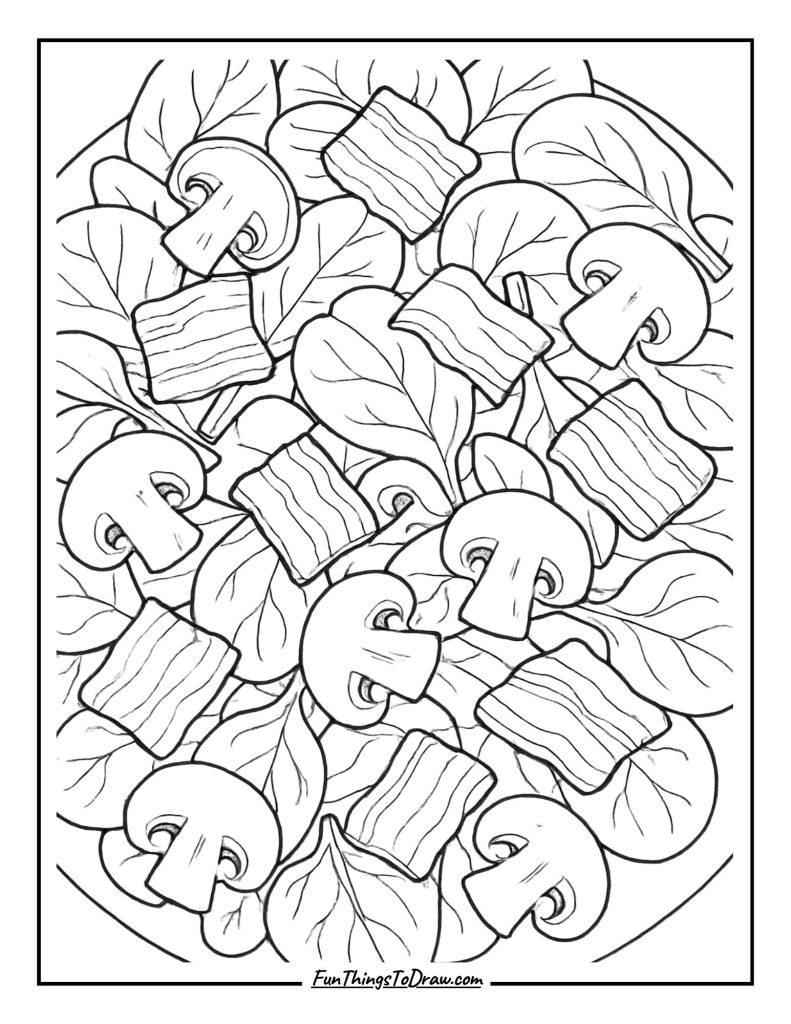
This salad is simple but elegant with fresh spinach leaves, mushrooms, and crunchy toppings like pecans or nuts. Spinach can be colored in dark leafy green shades, mushrooms in creamy white with tan tops, and pecans in warm brown tones. Adding shading makes the spinach leaves look fresh and natural. The contrast of light mushrooms against greens is beautiful.

This bowl is filled with classic potato salad, topped with herbs and creamy dressing. The potatoes can be shaded in pale yellow or light brown, while the dressing can remain creamy white. Add green touches for parsley and herbs to bring freshness. A little shading on the bowl and potatoes will add depth and realism.
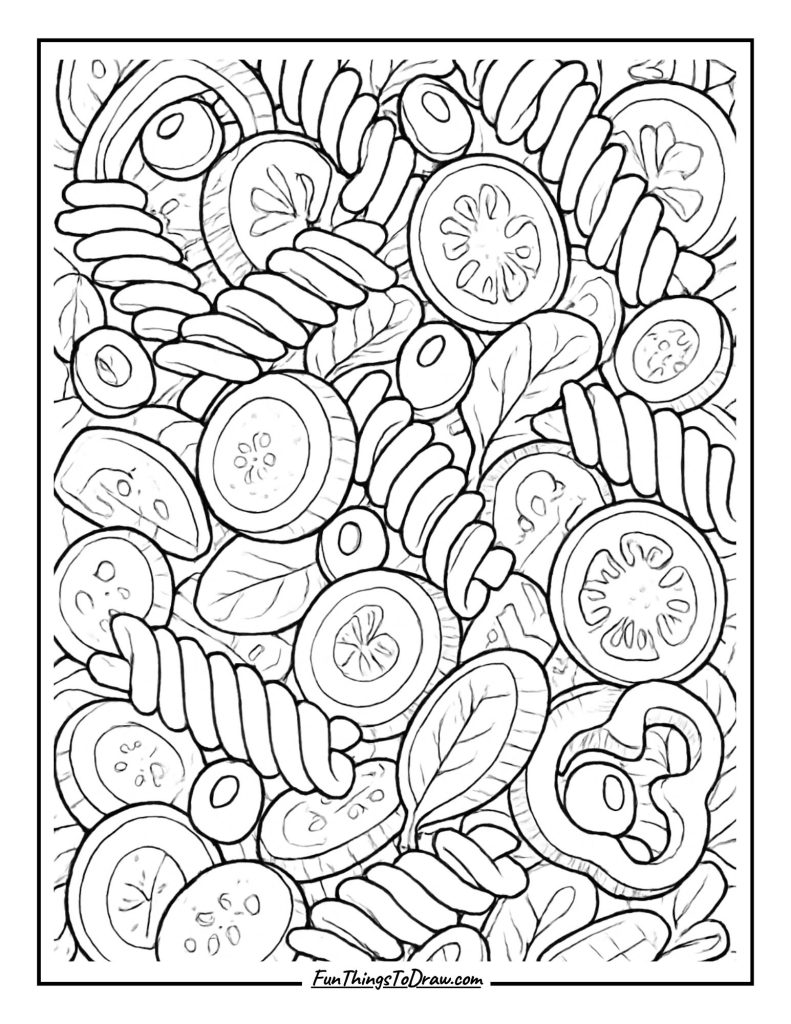
This lively pasta salad is full of rotini noodles, cucumber slices, tomato rounds, olives, and leafy greens. Color the pasta in light yellow or beige, tomatoes in red, cucumbers in green, and olives in black. The leafy greens should be painted in fresh shades of green, making the salad look like a colorful, cheerful dish.
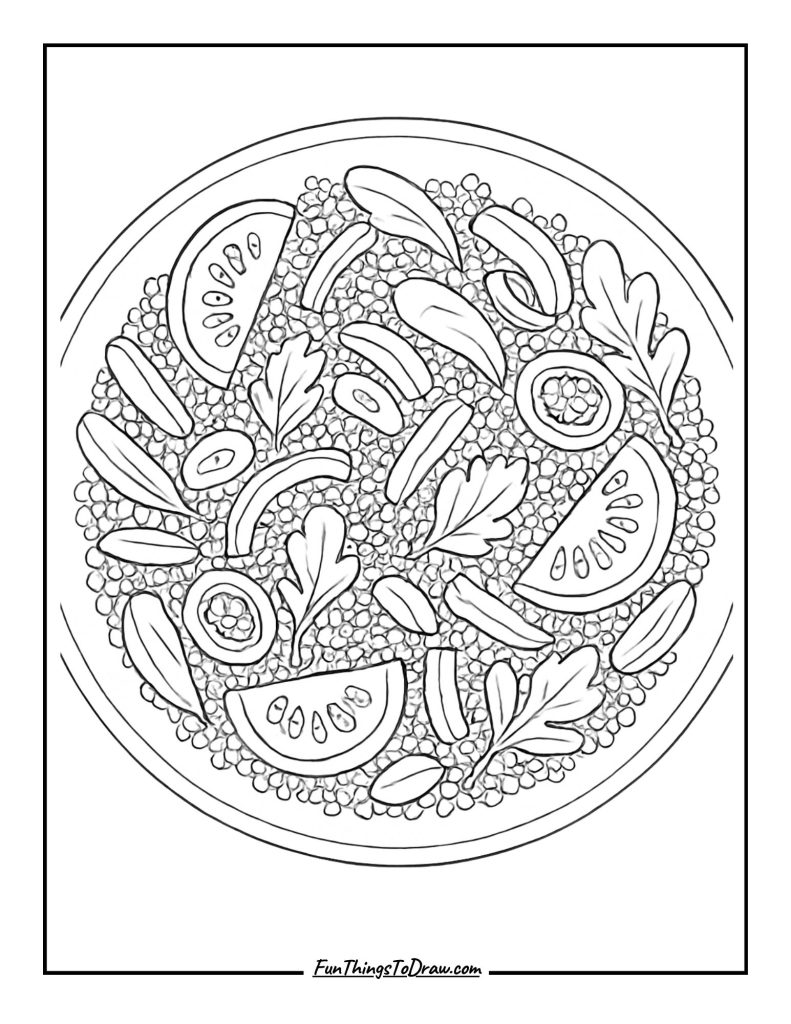
This page shows a healthy quinoa salad with tiny grains, tomato wedges, greens, and sliced vegetables. Quinoa grains can be colored beige or light golden. Tomatoes should be red, leafy greens bright green, and other vegetables like cucumbers or peppers can be shaded in their natural colors. This dish shines when you use soft earthy tones with vibrant highlights.
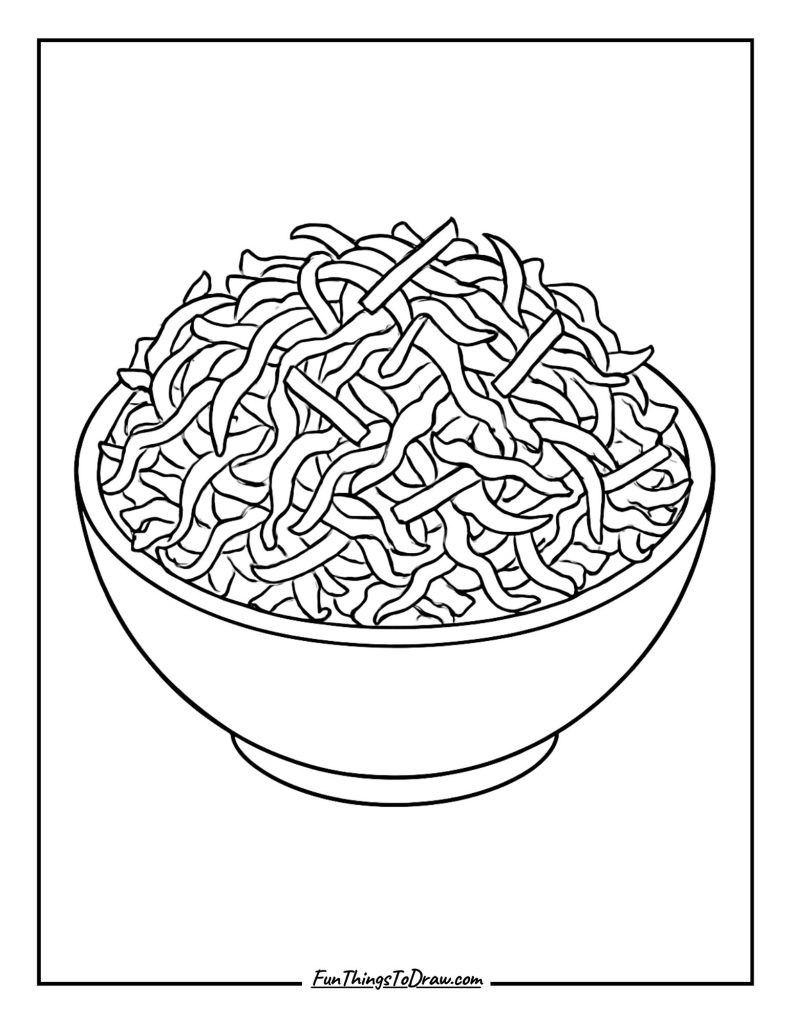
A bowl of shredded coleslaw made with cabbage and carrots. The cabbage strands can be pale green or white, while the carrots stand out in orange. The creamy dressing can be kept off-white with gentle shading. Add a few touches of darker green for herbs or celery. Keeping the mix colorful makes the page both fun and realistic.
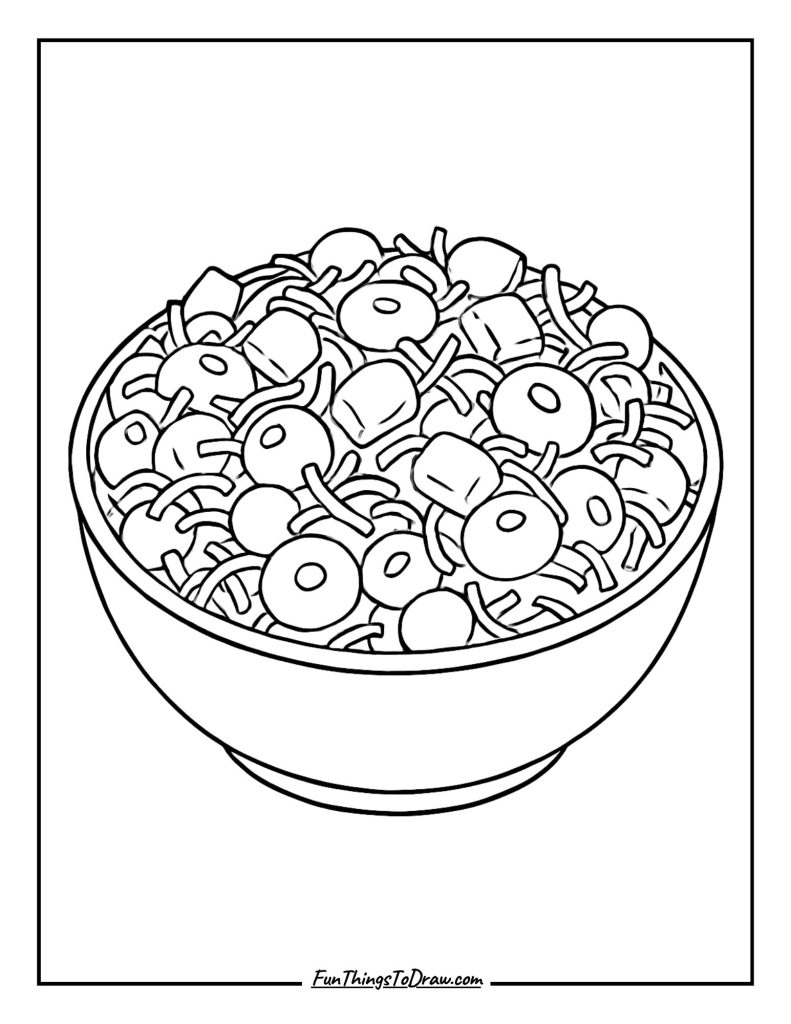
This sweet salad includes marshmallows, coconut, cherries, and fruit chunks. Marshmallows can be left white or pastel pink, coconut in soft white, and cherries in bright red. Grapes can be purple or green, and oranges in a rich orange shade. This page is best colored with playful pastel tones that highlight the sweetness of the dish.
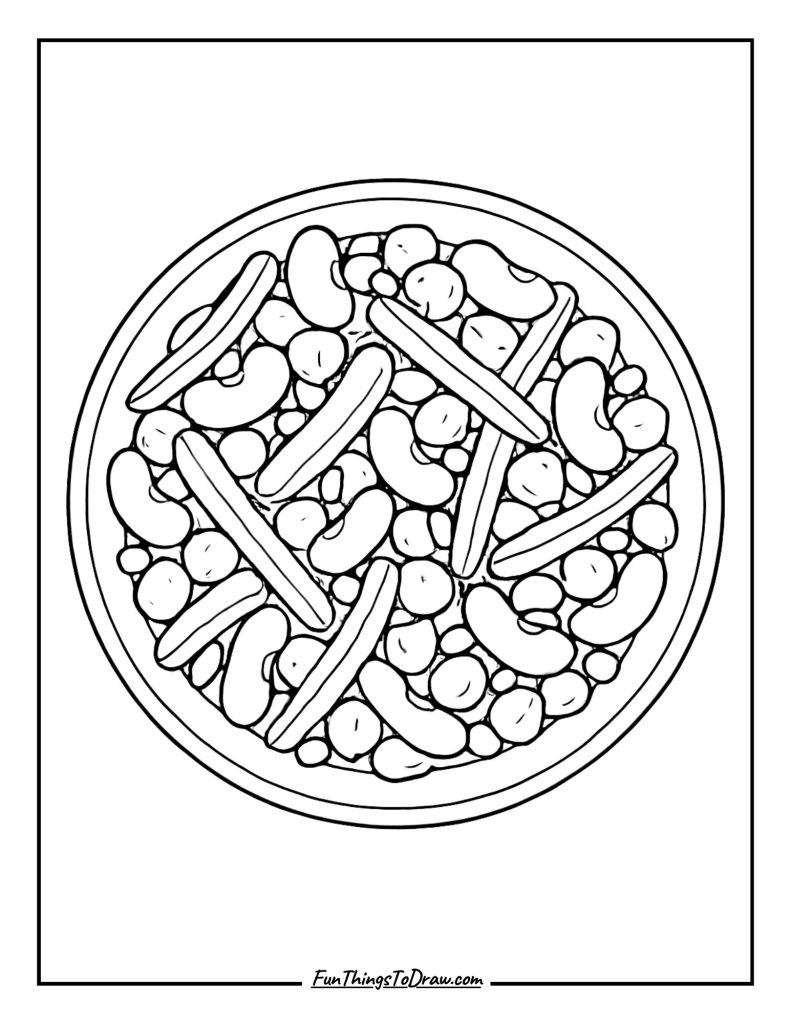
This bowl of three-bean salad is loaded with kidney beans, chickpeas, and green beans. Kidney beans can be deep red, chickpeas light beige, and green beans a vivid green. Add subtle shading for texture. The contrast between the three types of beans creates a colorful mix, and the bowl itself can be shaded neutral or light gray.
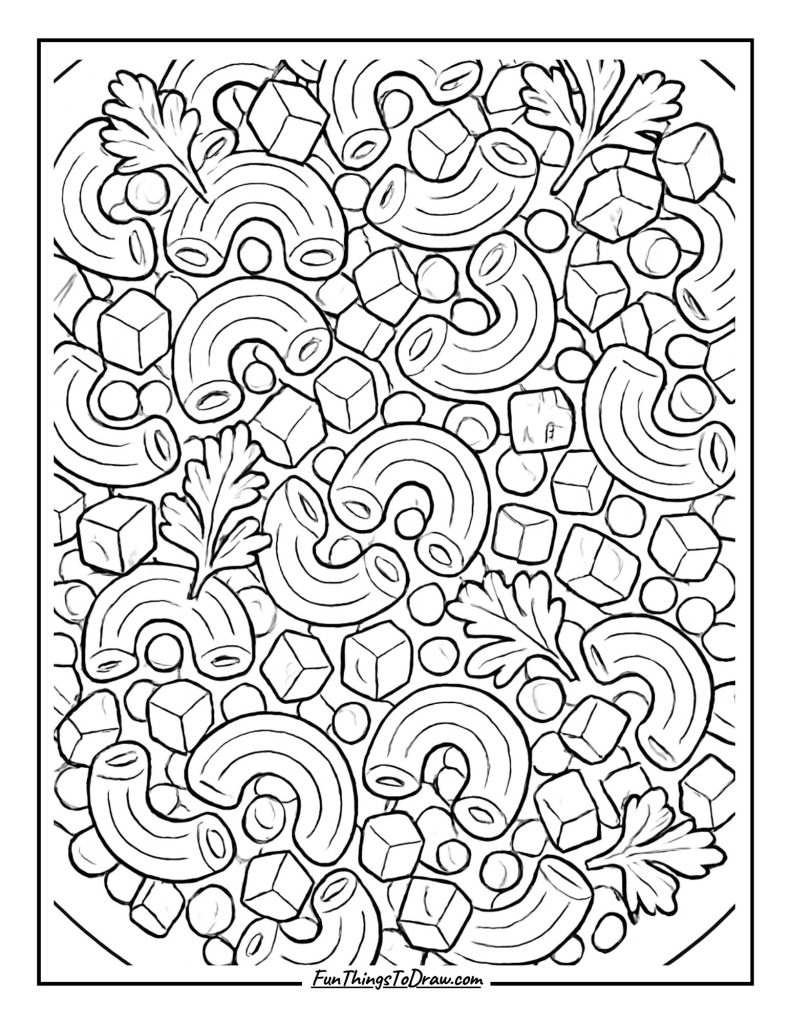
This macaroni salad uses elbow pasta with cubes of cheese, peas, and a creamy base. The pasta can be light yellow, cheese in orange or pale yellow, and peas in green. The creamy base can be kept off-white with soft shading. Small herb details can be green, making this salad look vibrant yet homely.
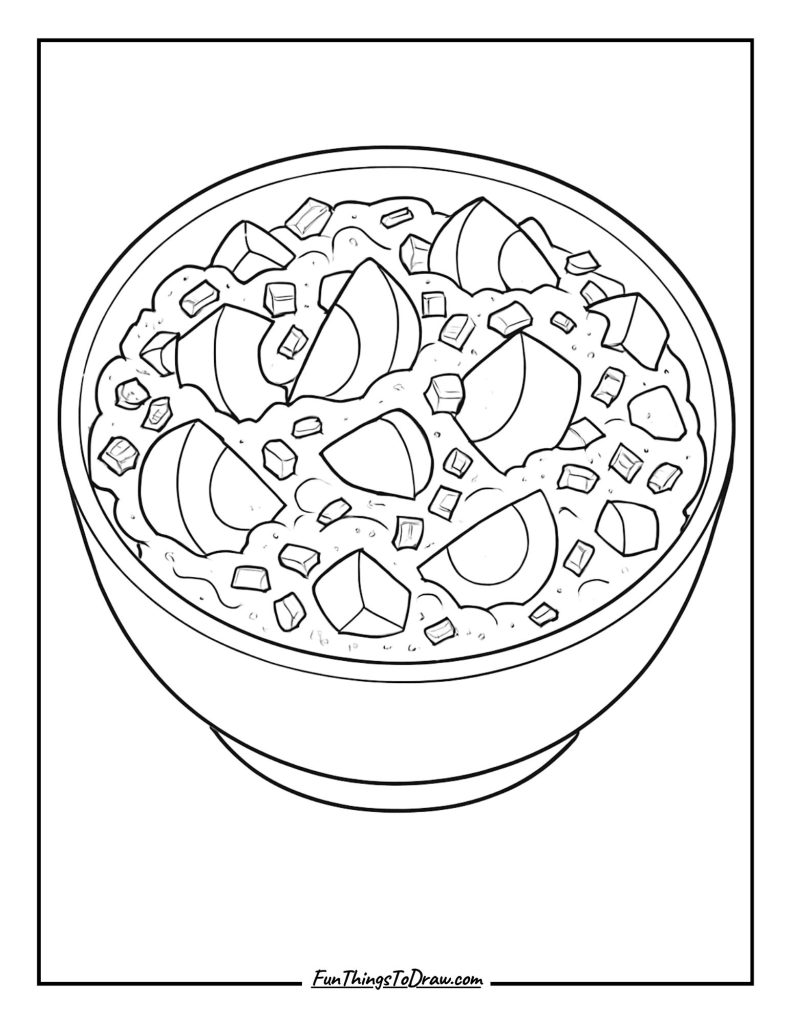
This bowl shows chopped hard-boiled eggs mixed with dressing. The eggs can be colored white with bright yellow yolks, while the dressing stays creamy beige. Small vegetable or herb pieces can be added with green and red tones. Shading the egg pieces will give them a realistic and appetizing look.
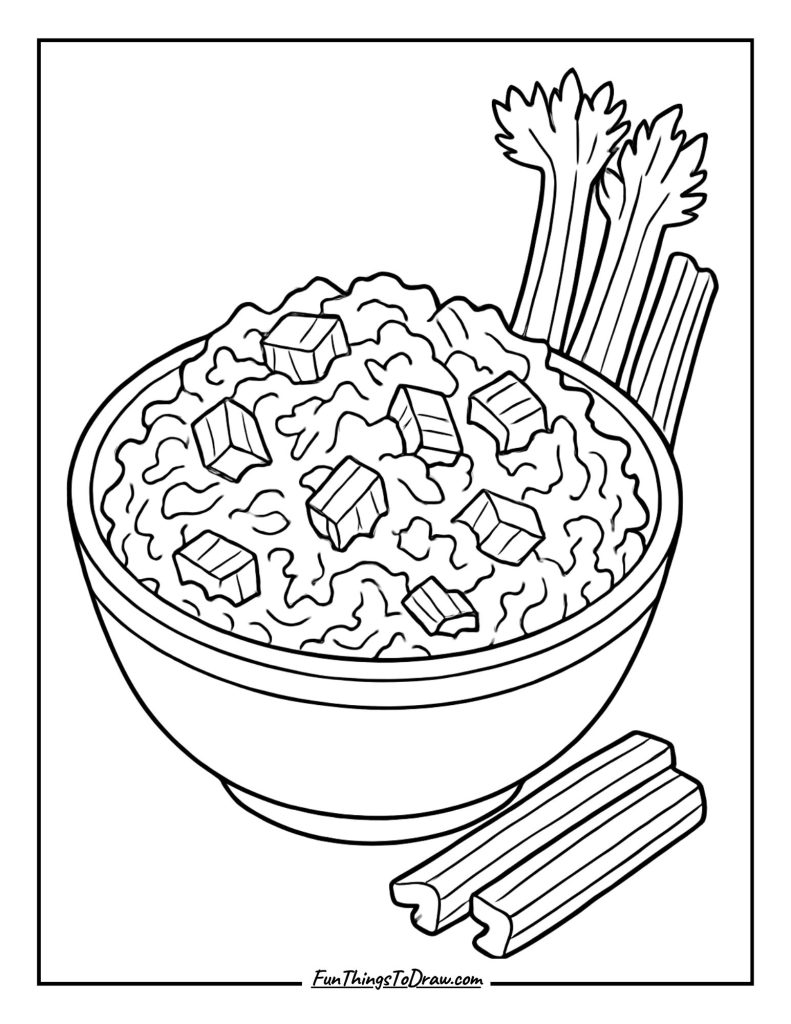
This tuna salad includes chunks of tuna, celery, and dressing. Tuna can be shaded pale pink or gray, celery in light green, and the dressing kept creamy. The bowl can have a neutral beige or gray shading. Highlighting the celery’s crispness with a deeper green edge will make the salad look fresher.
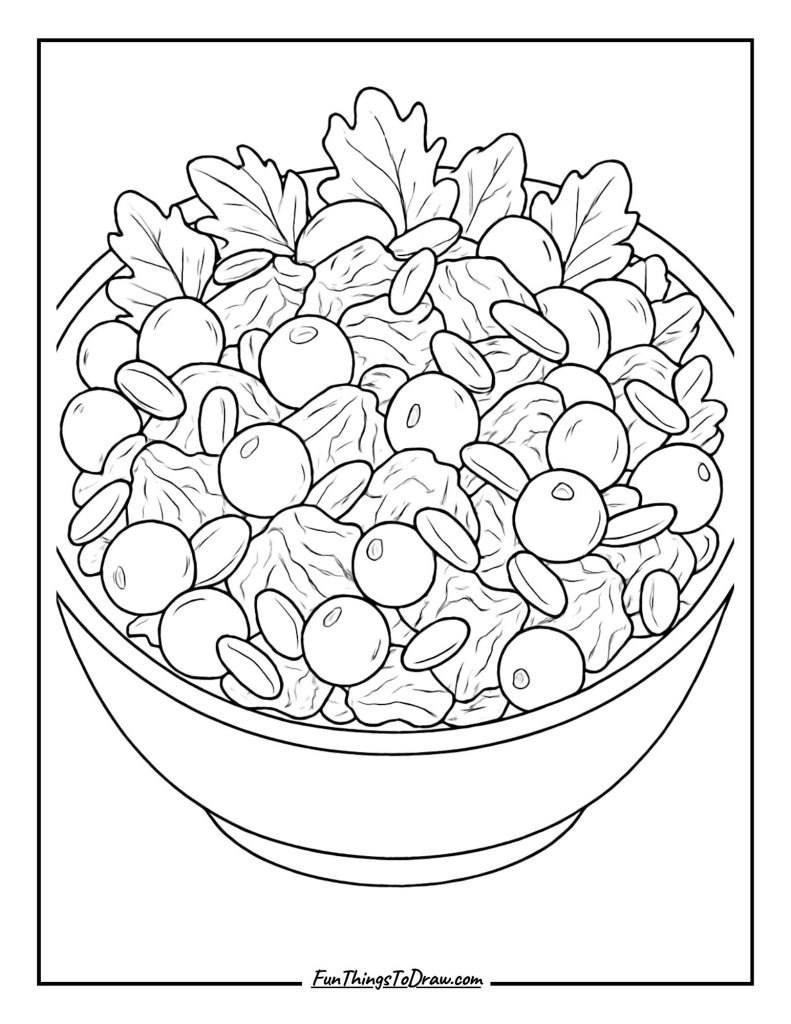
A classic chicken salad with grapes and almonds. The chicken can be colored beige or light brown, grapes in purple or green, and almonds in light brown. Lettuce leaves can be fresh green, while the dressing can stay white or pale yellow. This mix of earthy and fruity tones makes the coloring page bright and engaging.
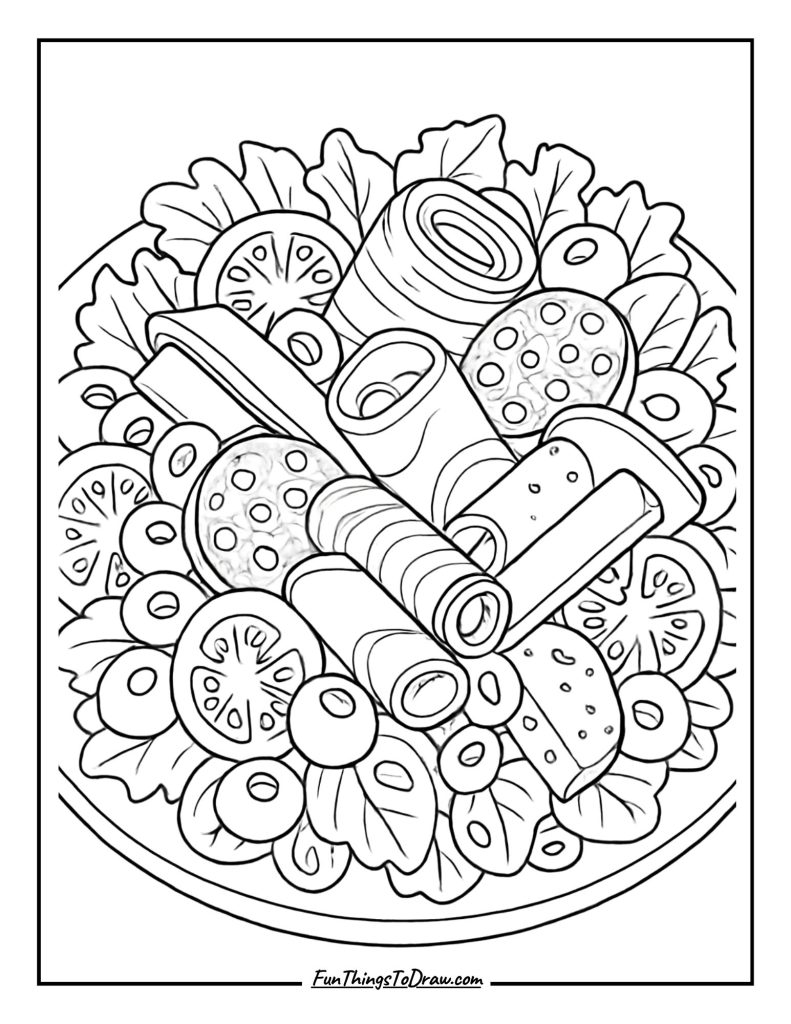
This salad bursts with Italian flavors, featuring rolled meats, cheeses, olives, and tomato slices over leafy greens. The meats can be shaded in pinks and reds, cheese in pale yellow, olives in black or green, and tomatoes in vibrant red. The lettuce can be kept fresh green, making the page rich in Mediterranean tones.
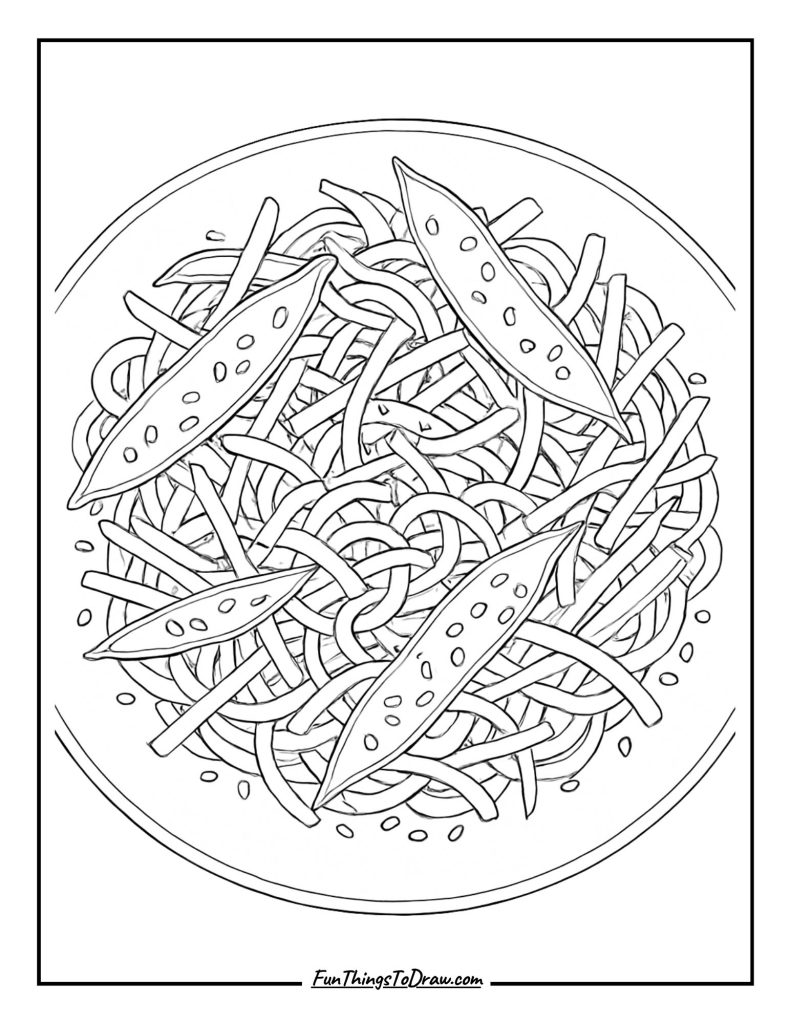
A light Asian salad with noodles, sesame seeds, and crisp snow peas. The noodles can be beige or golden, the snow peas in a bright green with lighter edges, and sesame seeds in soft tan. Adding subtle shading gives the noodles texture and depth. For a lively look, you may use contrasting greens and yellows.
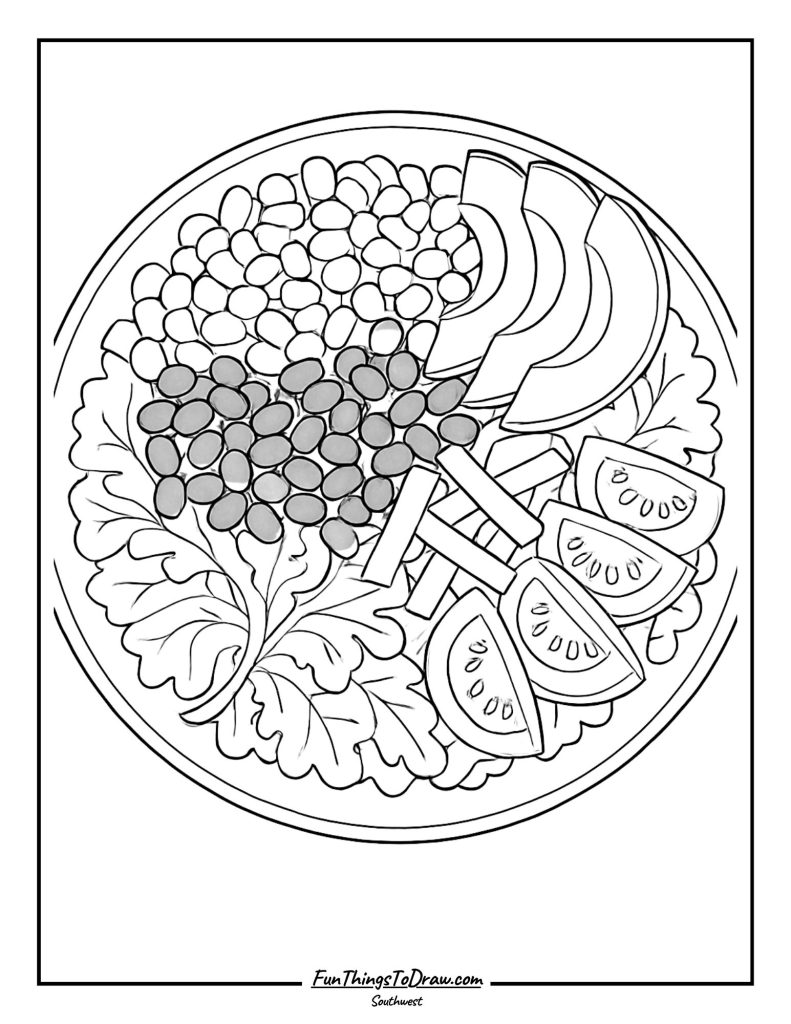
This Southwest-style salad is full of corn, black beans, tomatoes, and leafy greens. Color the corn in bright yellow, beans in deep black or dark brown, tomatoes in red, and greens in fresh green. A few earthy brown tones for tortilla strips can make it more realistic. This page invites vibrant, bold coloring to capture its southwestern flair.
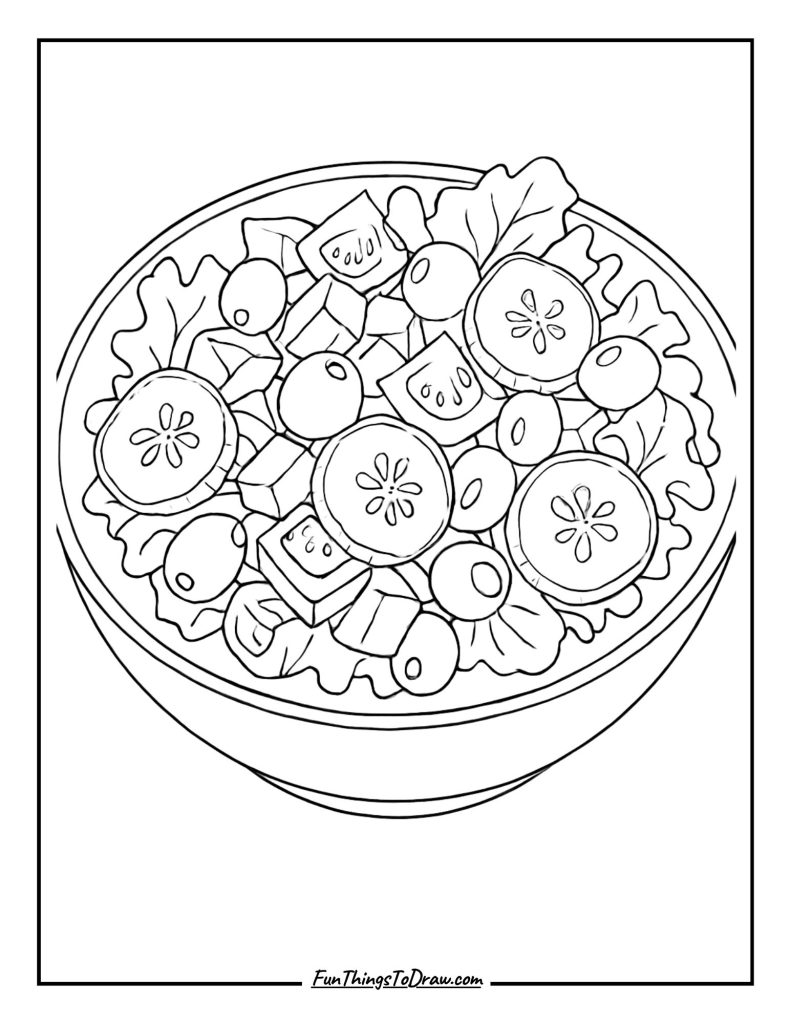
A Mediterranean salad with cucumbers, olives, tomatoes, and fresh greens. The cucumbers can be light green with darker outlines, olives in black or green, and tomatoes bright red. Feta cheese cubes, if present, can be left white with pale shading. The greens should be lively, contrasting nicely with the bold colors of olives and tomatoes.
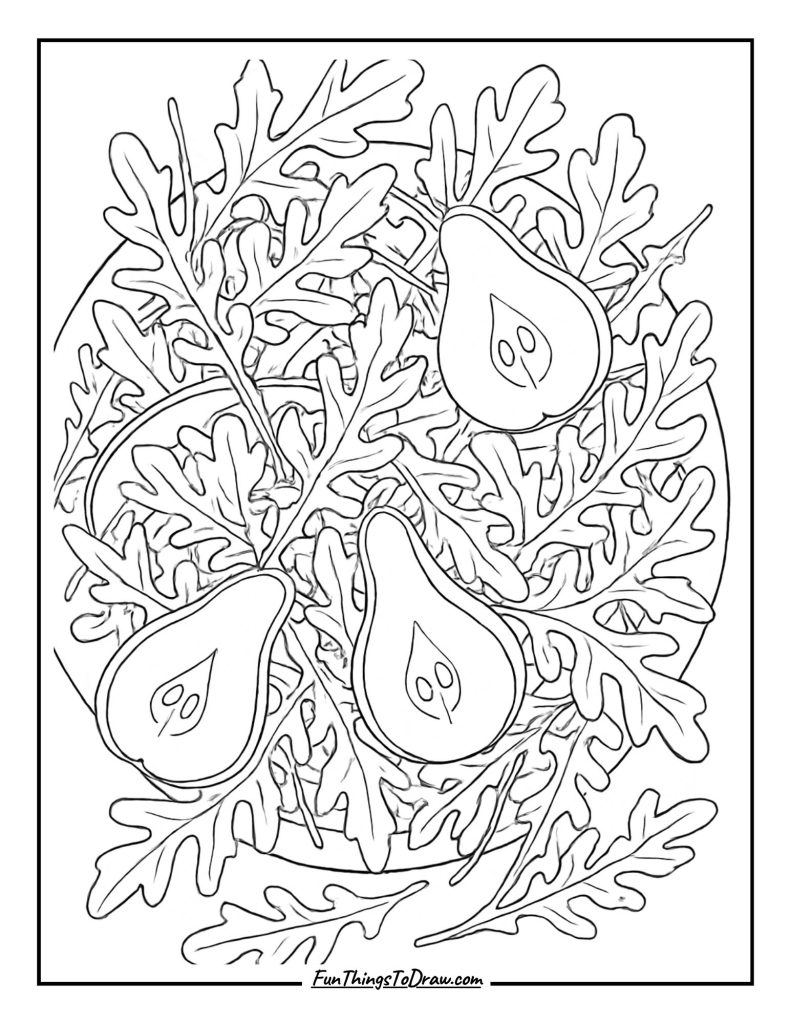
This salad shows crisp arugula leaves with slices of pear for a refreshing twist. The arugula can be colored in deep leafy green, while the pear slices should be shaded pale yellow or light green with soft brown edges. Add light highlights for the pears to show freshness. This page blends earthy tones with fruity softness.
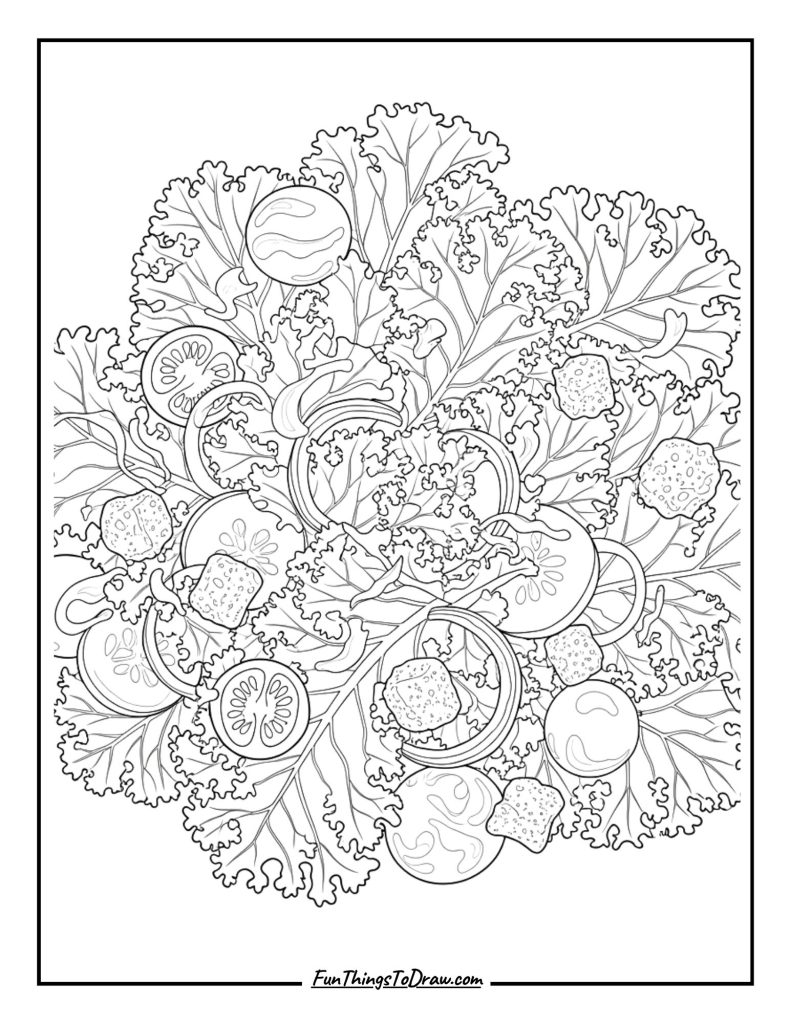
A hearty kale salad with curly, textured leaves filling the bowl. The kale can be colored in deep, rich green with darker accents on the curly edges. Tomatoes or onions, if present, can add pops of red or purple. Adding lighter shading on the kale’s inner veins will enhance its natural detail and freshness.
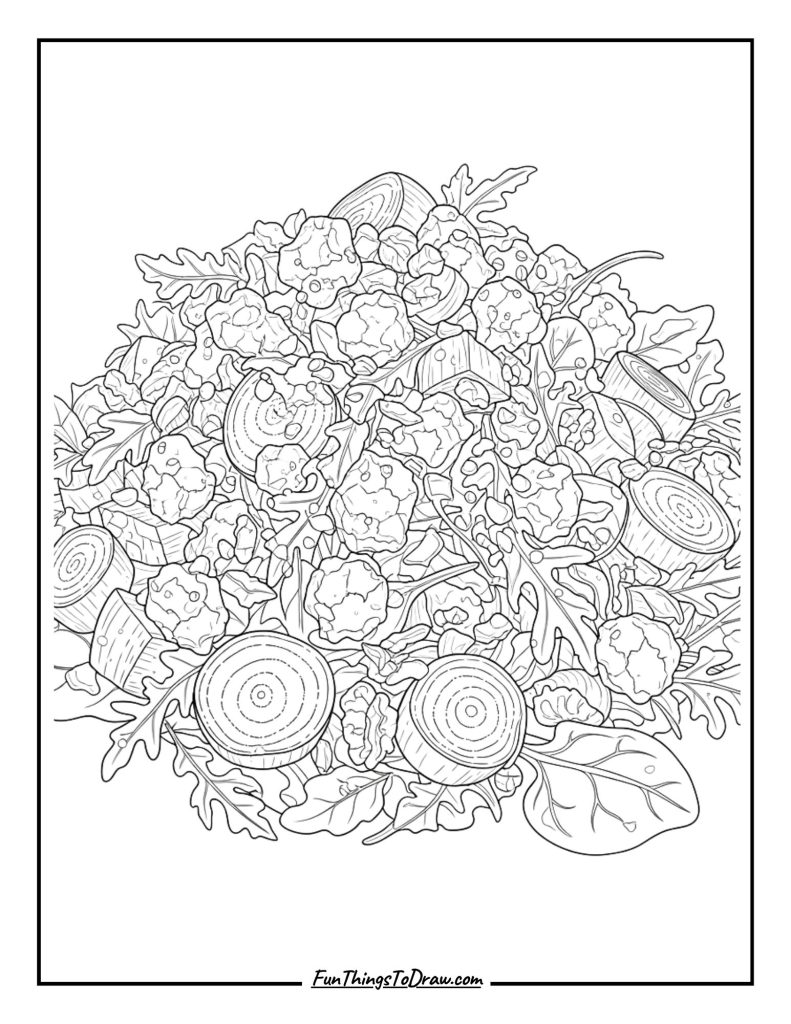
This salad combines sliced beets, greens, and crumbles of goat cheese. The beets can be colored in rich purples and deep reds, the goat cheese in creamy white, and the greens in fresh leafy shades. Adding shading around the beet rings will bring out their layered patterns. This page invites bold and contrasting colors.
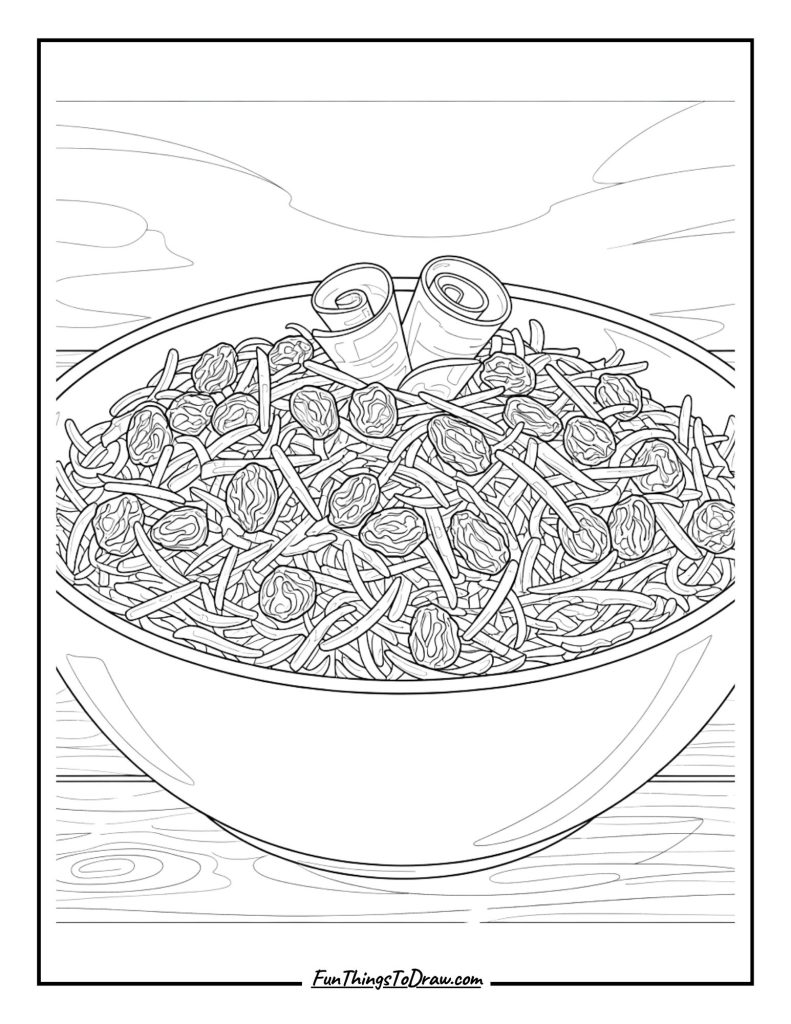
A sweet carrot salad with raisins mixed in. The carrots can be bright orange, raisins in dark purple or brown, and the base in creamy beige. Small green herbs can be added for contrast. Shading the carrot shreds makes the page look dynamic and textured, while the raisins provide dark spots that balance the colors.

This bowl shows fresh broccoli florets mixed with lettuce and bacon bits. The broccoli can be colored green with darker tops, lettuce in lighter green, and bacon in reddish-brown. Small bits of cheese or dressing may be shaded creamy yellow or white. The wooden bowl can be given light brown with darker streaks for texture.
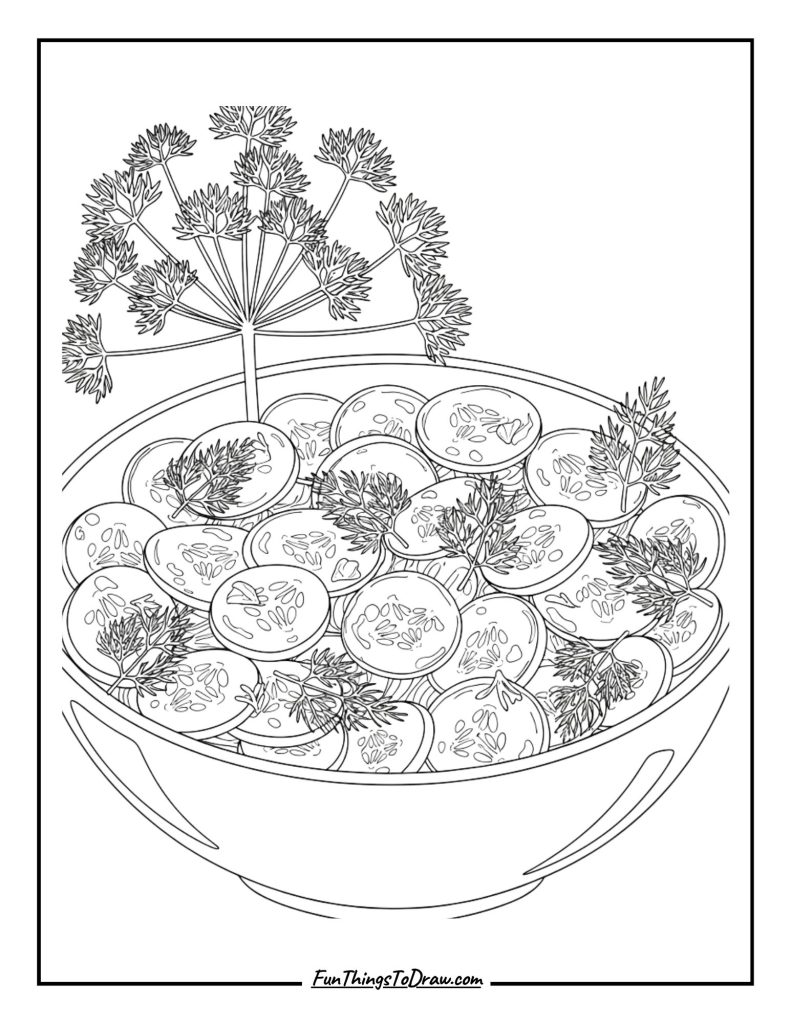
A refreshing cucumber salad with thin slices, fresh dill, and a light base. Cucumbers can be light green with dark edges, seeds in pale yellow or white, and dill in deep green. The dressing can be left creamy white with subtle shading. This page has a calm, cool tone that emphasizes freshness and simplicity.
31. Tomato Salad with Fresh Basil
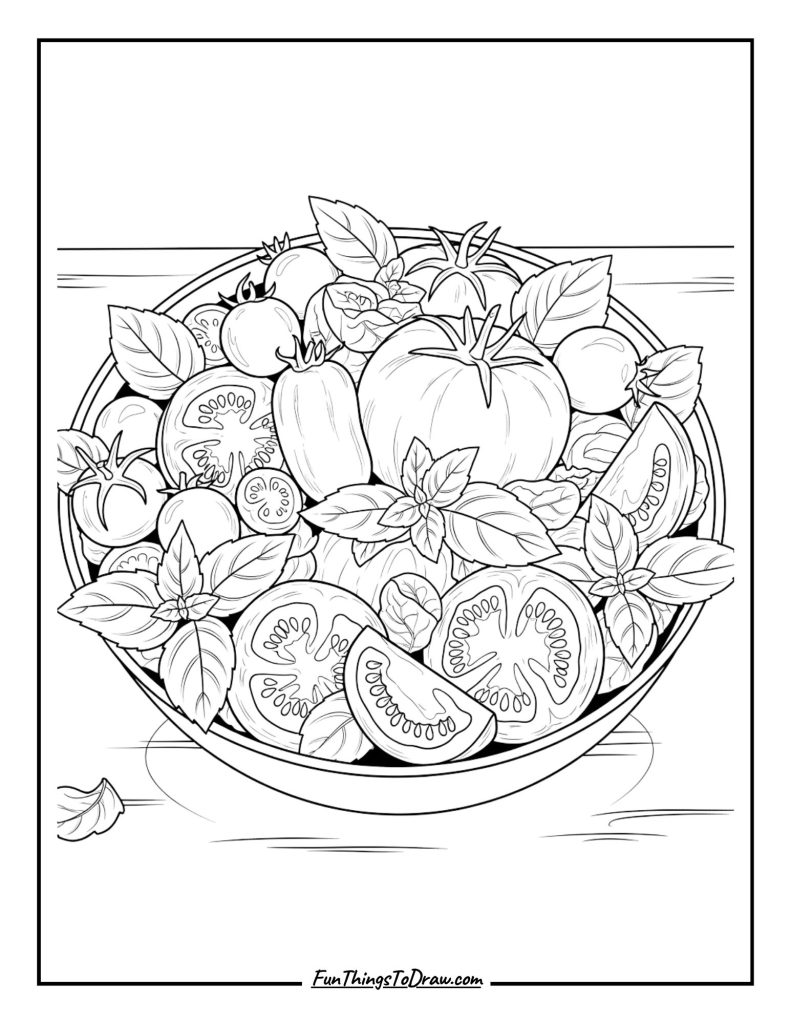
This page presents a refreshing tomato salad brimming with different tomato varieties, from plump round ones to sliced wedges, surrounded by fragrant basil leaves. The mix gives off a natural, rustic garden vibe.
Shade tomatoes in deep reds and bright cherry tones, basil leaves in rich greens, and add earthy brown to the bowl for contrast.
32. Avocado Salad with Lime Wedges
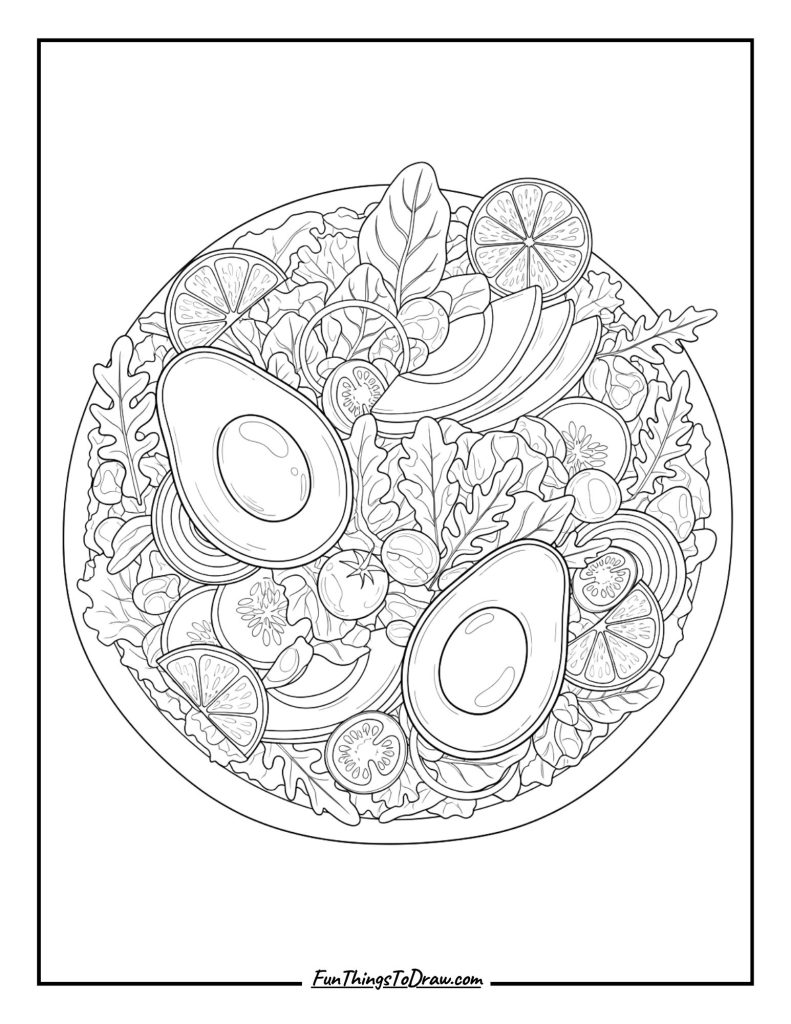
A vibrant bowl featuring halved avocados, citrus wedges, onions, and leafy greens, perfect for capturing tropical freshness. The details make it a dynamic and full illustration with layers of texture.
Use light green for avocado flesh with dark green skins, yellow-green for limes, red and purple for onions, and a mix of greens for salad leaves.
33. Apple Salad with Cheddar Cheese
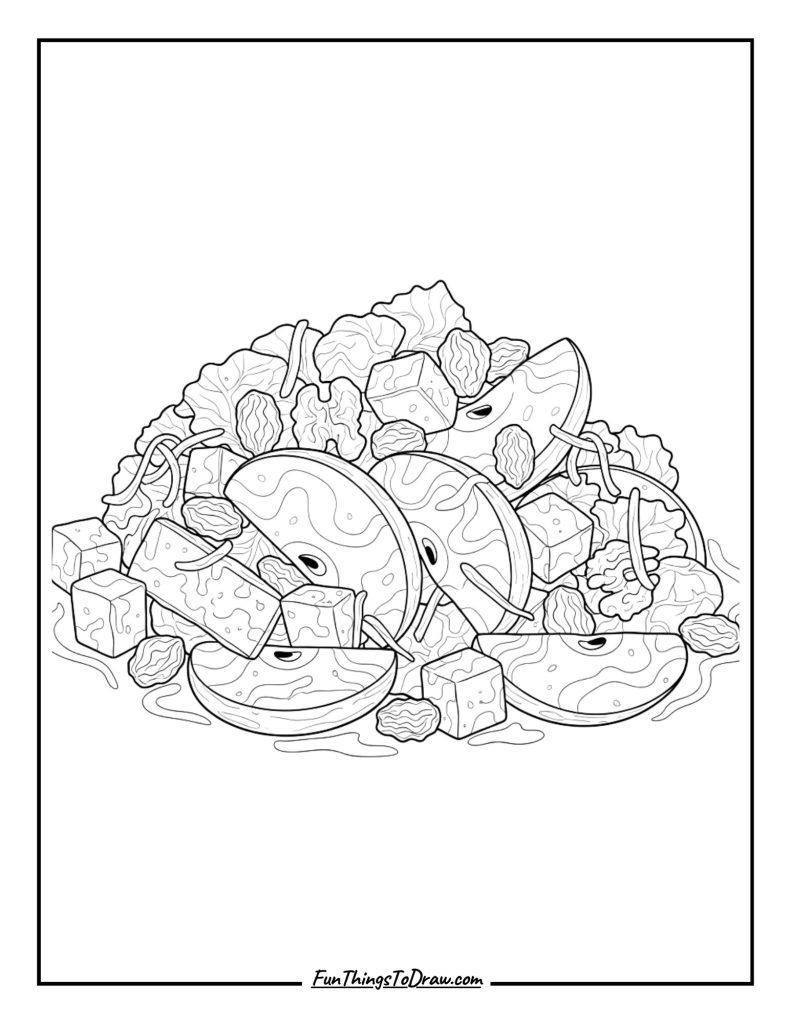
This salad is a creative blend of apple slices, cubes of cheddar, leafy greens, and crunchy extras. The contrast of fruit and cheese gives the page a playful, hearty look.
Shade apples in red or green, cheddar in bright orange-yellow, lettuce in crisp green, and add browns or tans for nuts or croutons.
34. Pear and Blue Cheese Salad
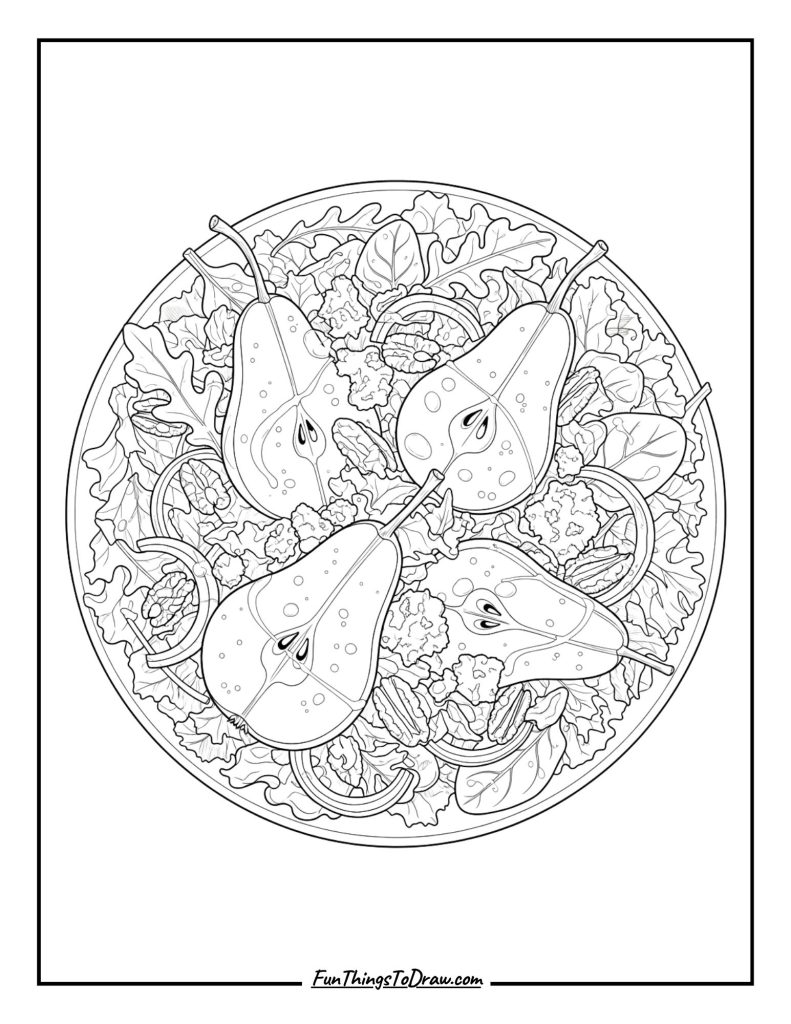
A gourmet salad featuring halved pears placed on a bed of greens with chunks of creamy cheese and textured toppings. It gives off a sophisticated yet earthy feel.
Color pears in yellow-green shades with soft brown stems, blue cheese pieces in pale cream with light bluish accents, and leaves in varying green tones for freshness.
35. Mixed Green Salad with Variety Lettuce Leaves
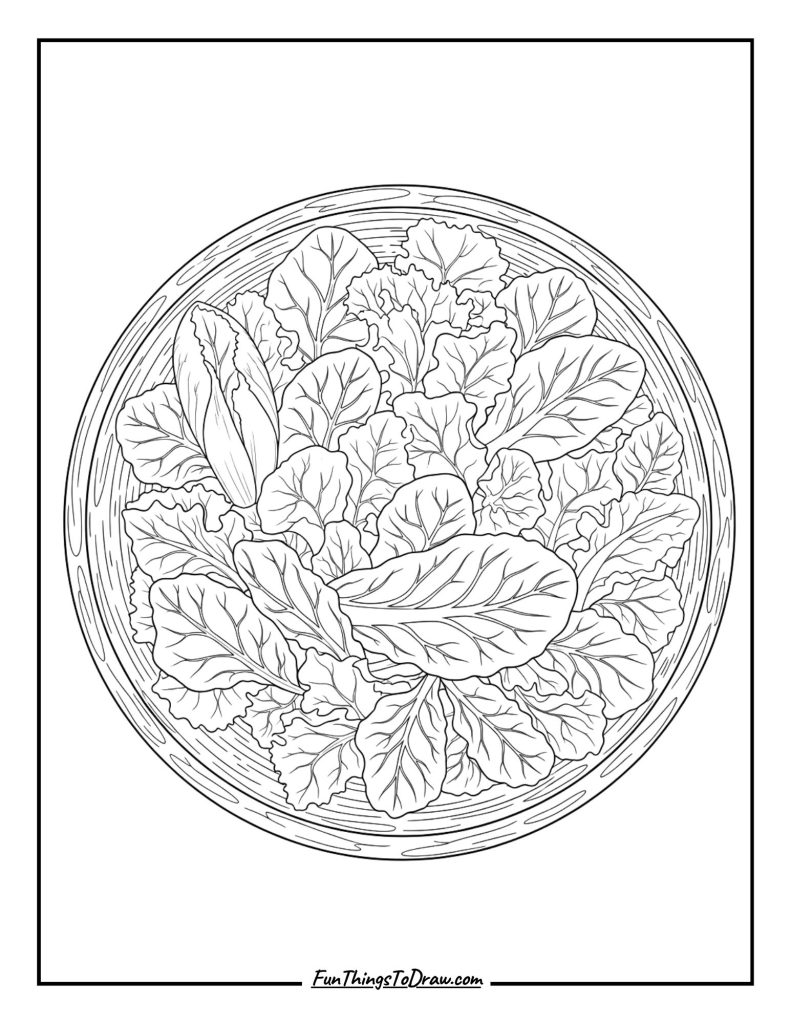
This salad plate highlights a simple yet beautiful arrangement of lettuce leaves layered in a bowl. With curly, long, and wide leaves, it offers space for experimenting with shades.
Use a mix of greens light, dark, and even touches of yellow-green to bring out variety. Shade the wooden bowl with warm brown textures for a natural look.